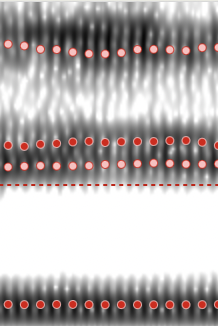
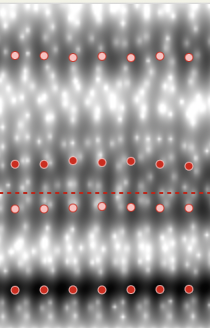
Although the consonants in the literature are the same as the recorded speaker, the vowels recorded by the SwaTao speaker differs from the expected vowels in the Teochew Proper literature
Expected Vowels
According to the Teochew Proper transcriptions, the below table maps the Peng'im Orthography to IPA
Vowel IPA
Vowel Peng’im
IPA Transcription
Peng’im Transcription
SwaTao Gloss
Chinese Gloss
English Gloss
/i/
i
/mi/
mi7
面
面
Noodle
/e/
ê
/me/ /si/
mê5 si7
暝时
夜晚
Night
/a/
a
/ma/
ma5
妈
妈
Mom
/o/
o
/mo/
mo2
毛
毛
Fur
/u/
u
/gu/
ghu1
牛
牛
Cow
/ɯ/
e
/kʰɯ/
ke3
去
去
Go
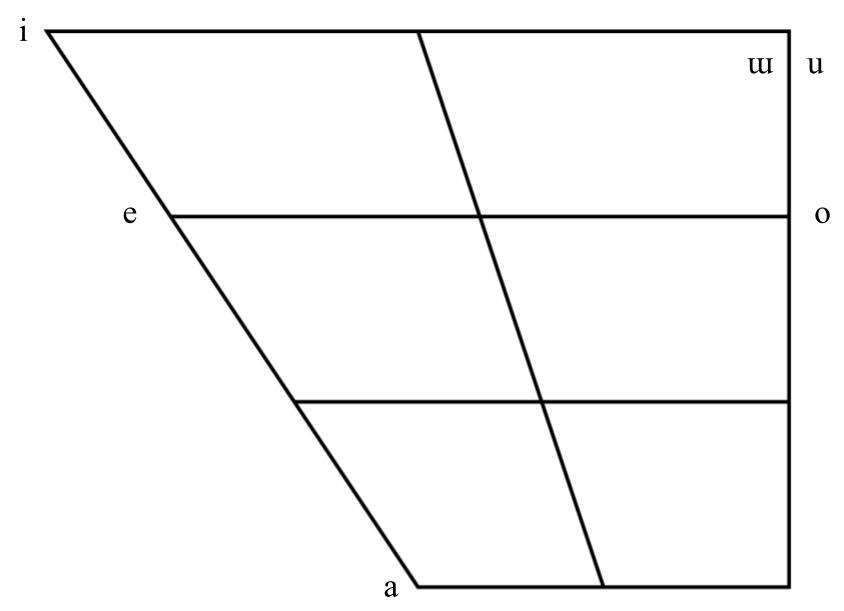
Expected Vowel Chart
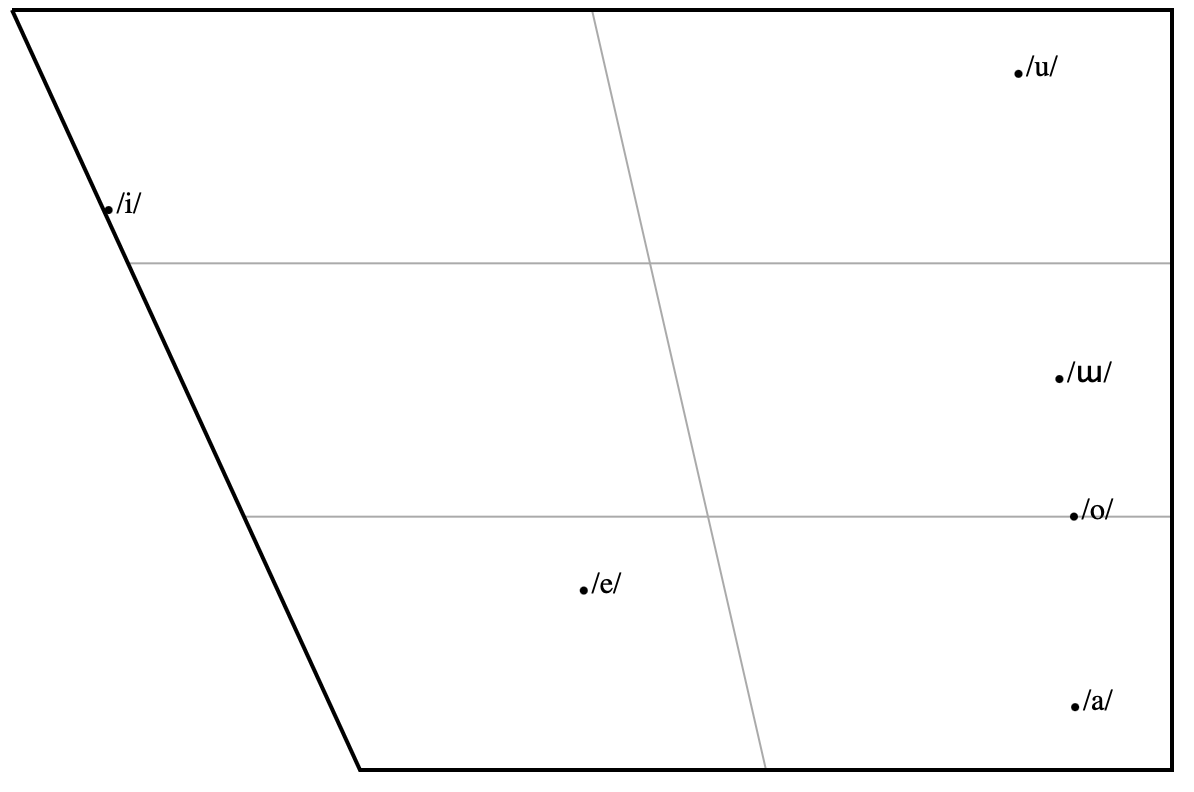
Recorded Vowels
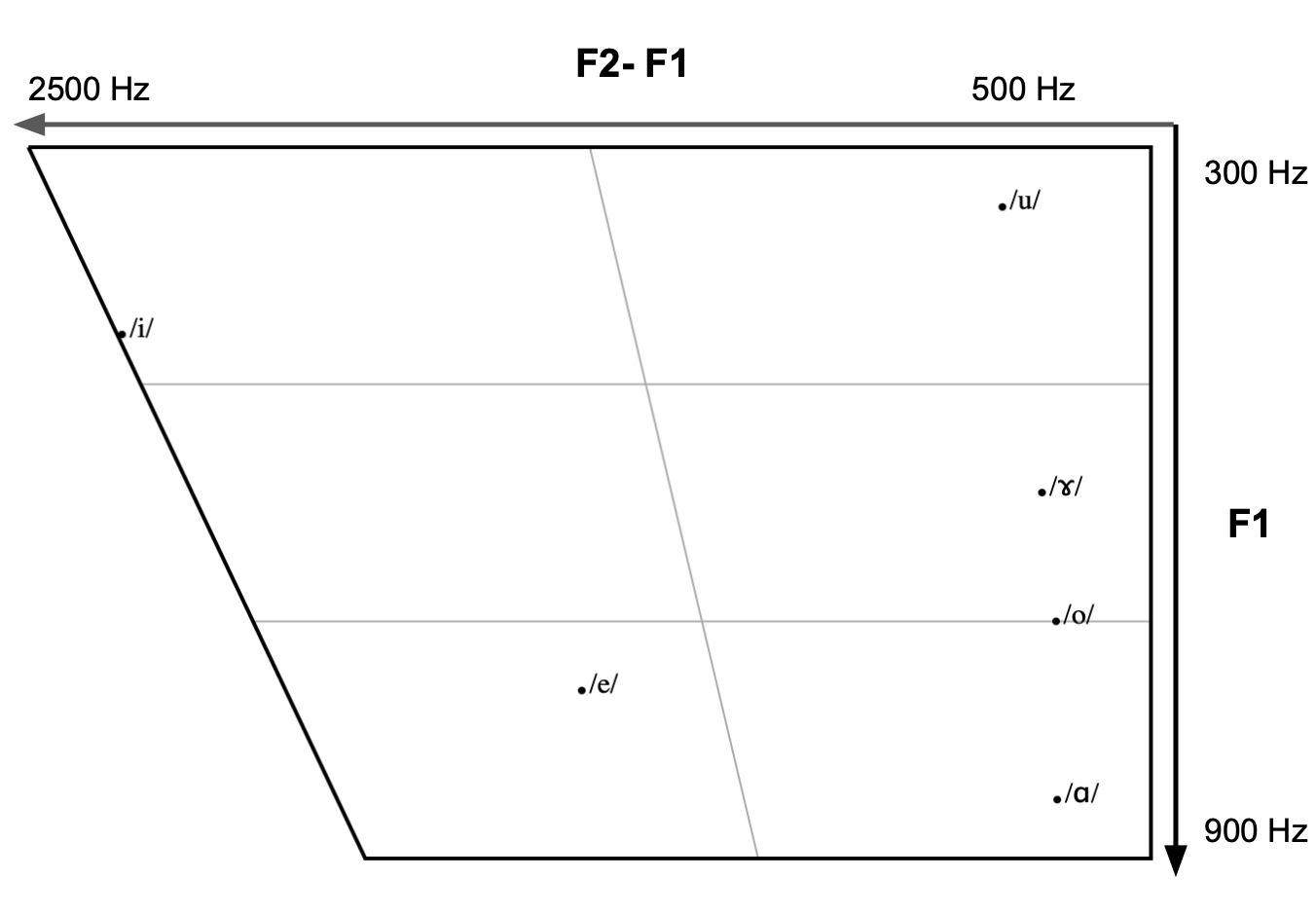
Before going into the details on the vowel identification, below details the process to I used to obtain the Vowel Charts:
Vowel Calculation Method
Since the vowel was produced in a /CV/ context, I selected only the portion where the consonant formant modulation is not present (vowel formants become stable)
Used the Formant>Formant Listing from Praat
Took the median of the entire time series for F2-F1 and F1 values and plot them
Recorded Vowel Chart with Original Vowels
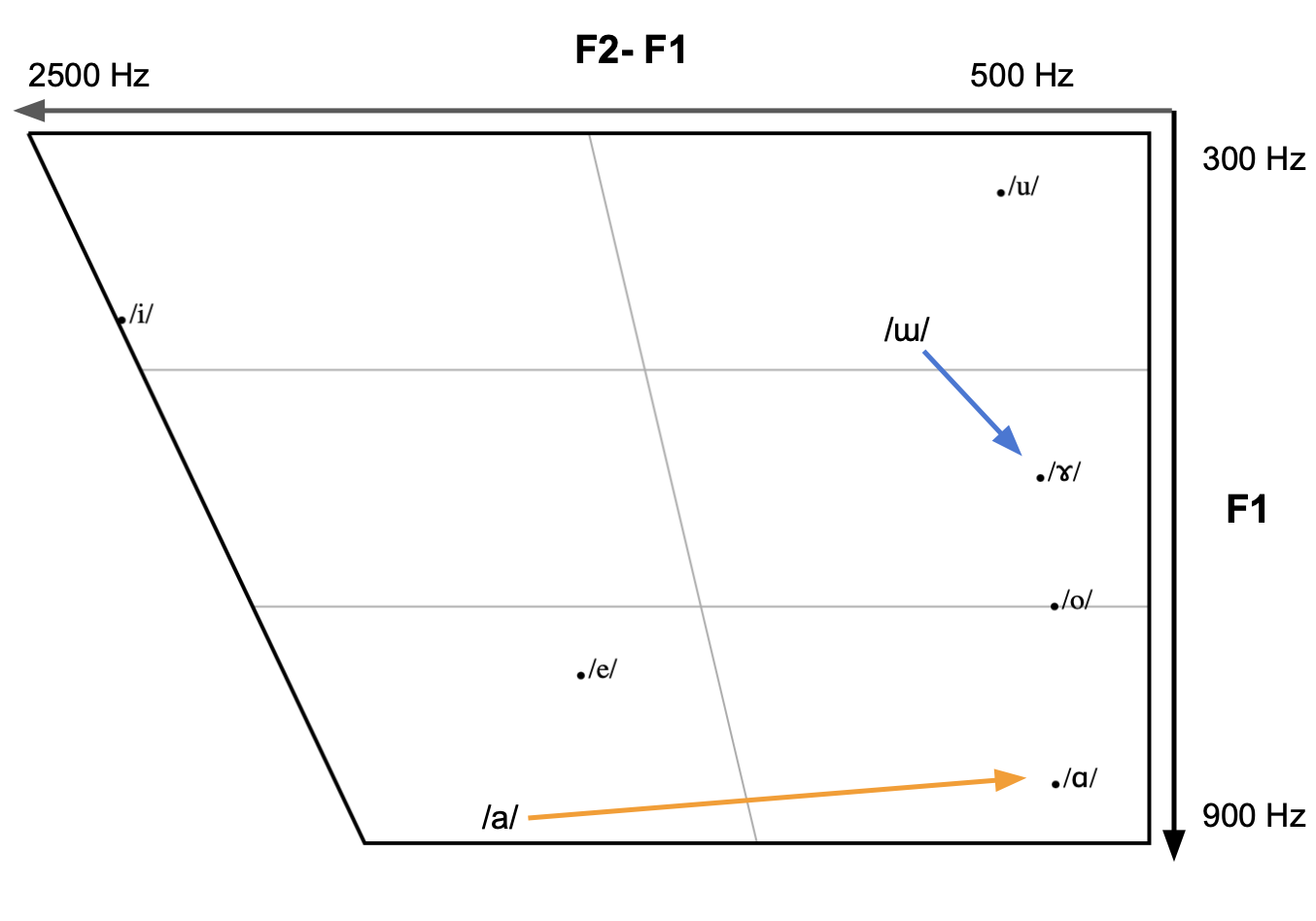
Based on the positions of /ɯ/ and /a/, the there seems to be a slight lowering of F2 in the vowel supposed to be /ɯ/ and an extreme lowering of F2 in the vowel supposed to be /a/
Recorded Vowel Chart
Vowel Shift in SwaTao
When listening to the recording combined with the new data, SwaTao seems to have /ɤ/ and /ɑ/ rather than /ɯ/ and /a/
Peng’im
Expected Vowel
Recorded Vowel
a
/a/
/ɑ/
e
/ɯ/
/ɤ/
Vowel IPA
Vowel Peng’im
IPA Transcription
Peng’im Transcription
SwaTao Gloss
Chinese Gloss
English Gloss
/ɑ/
a
/mɑ/
ma5
妈
妈
Mom
/ɤ/
e
/kʰɤ/
ke3
去
去
Go
Description
Vowel Chart
Hypothesized Shifted Vowel Chart
Potential “Backing” shift from Teochew Proper to SwaTao
Investigating /e/ vs. /ɛ/
Something interesting while looking at the formant chart is the /e/ vowel having a much higher F1 then expected1.
While this could suggest that the /e/ vowel in Teochew Proper shifts to a lower F1 /ɛ/ in SwaTao, /e/ and /ɛ/ seem to experience allophonic variation2 in Teochew so it is unclear which vowel is the phonological unit
However, it is unclear whether the shift from /ɯ/ to /ɤ/ and /a/ to /ɑ/ and shift is due to: (1) variety, (2) speaker, or (3) speaking conditions of the normal speaker.
The /ɯ/ and /a/ vowel shift to /ɤ/ and /ɑ/ for all SwaTao speakers
(1) There is a Backing of the /ɯ/ and /a/ vowels from Teochew Proper to SwaTao under all conditions
(2) SwaTao speaker’s phonological unit3 for those 2 vowels differs from Teochew Proper’s
Speaking Conditions
The Backing only occurs in limited conditions
(1) There is a Backing from Teochew Proper to SwaTao under certain conditions
(2) The phonological unit for the 2 vowels are the same in SwaTao and Teochew Proper but experience allophonic variation4
Speaker Specific
The vowel shift is only present in the native speaker recorded and not for other speakers of SwaTao
(1) There is no difference in vowels between both varieties
(2) The phonological units for both varieties are the same
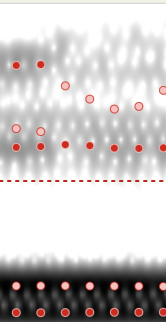
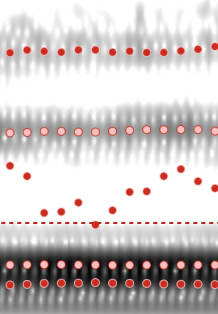
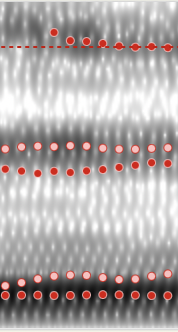
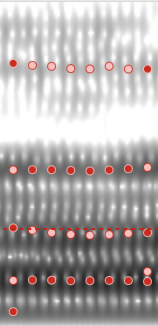
Vowel Spectrograms
Back Vowel IPA
Spectogram
/u/
/o/
/ɤ/
/ɑ/
Front Vowel IPA
Spectogram
/i/
/e/
Relating to Source Filter Theory, the /e/ and /ɛ/ vowels differ only in Constriction Degree at the PalatalConstriction Location. Since the palatal constriction occurs at an antinode or maximum movement point of air molecules in the Vocal Tract, the antinode is mass controlled. A constriction at the mass controlled area decreases the frequency, which means that the higher the vowel, the greater the Constriction Degree and the lower the F1. Therefore, F1 and vowel height are inversely related, lower vowels have higher F1s. ↩
Allophonic Variation refers to the idea that the same Phonologic Unit may be produced with different but close Constriction Degrees and Constriction Locations. Speakers do not differentiate between words/phonemes when in allophonic distribution. ↩
Phonological Unit refers to an abstract mental unit representing the information a speaker needs to decode (understand from a speech signal) or encode (produce) a given sound. More specifically, the Phonological Unit is likely a set of Dynamical Systems governing the movement of Vocal Tract Constrictors where the target Constriction Location (traditionally Place of Articulation) and Constriction Degree (traditionally Manner of Articulation) are the goals of each Dynamical System↩
Due to the synergy and interaction of the Dynamical Systems controlling each Constrictor–in this case, Tongue Body–/ɯ/ and /a/ have greater Pharyngeal Constriction↩